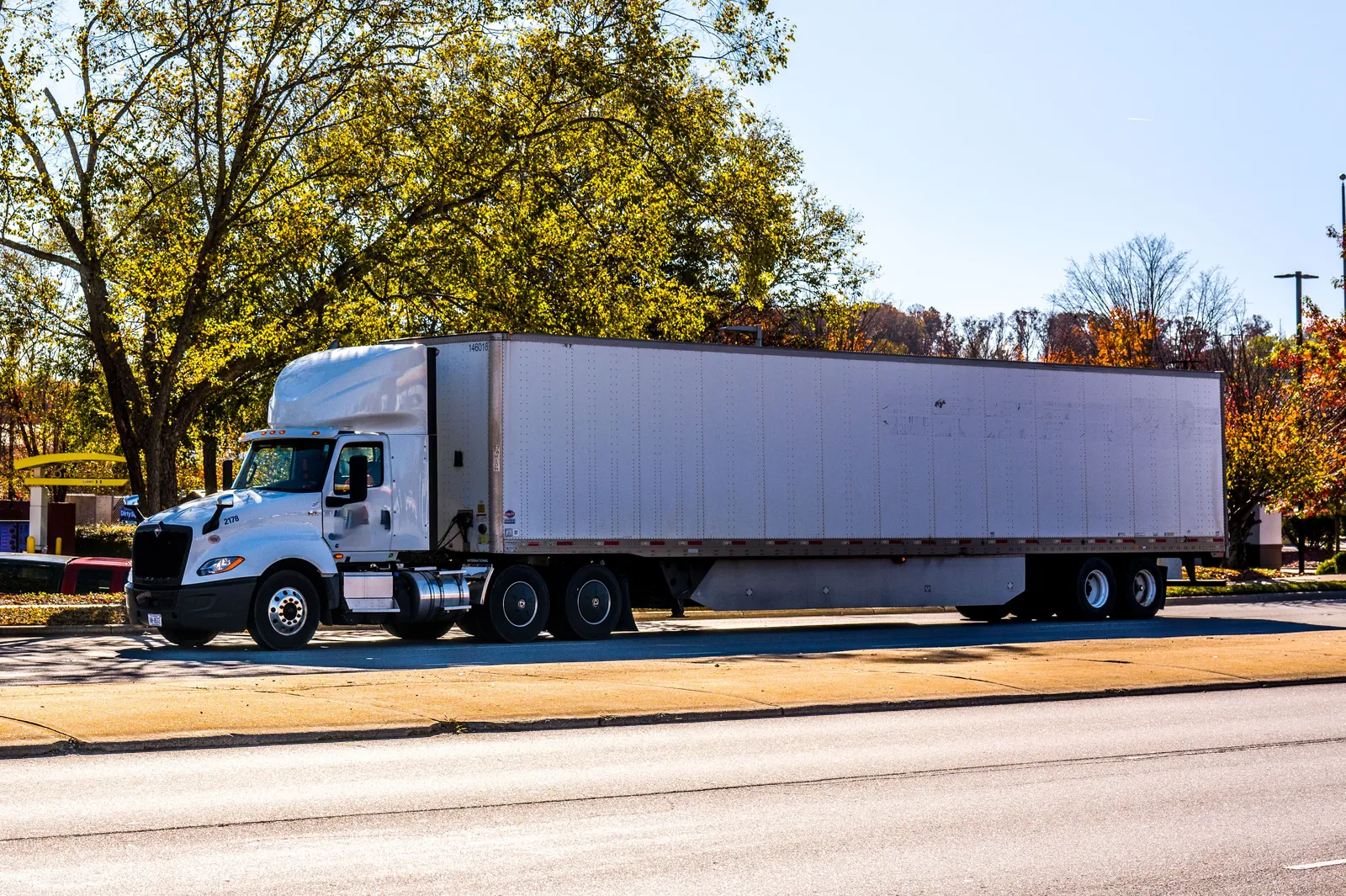

Truck & 18-wheeler accident lawyer in Dallas

A crash with an 18-wheeler is not an ordinary wreck.

A loaded tractor-trailer can weigh up to 80,000 pounds, the trucking company and its insurance often start building their defense right away, and key evidence such as video footage, driver logs, and black-box data can be lost if you don’t take the proper steps. Mehr Legal is based in Dallas County and serving all of Texas, representing people hurt by commercial trucks and 18-wheelers.

At our firm you work directly with your attorney to build a strategic plan for getting you the compensation you deserve. We have the knowledge and experience of investigating complicated truck and 18-wheeler crashes, understanding the root cause for the crash, and fighting for justice for injured Texans.

How we handle truck and 18-wheeler cases

Every truck case at Mehr Legal is handled personally by attorney Sikandar Mehr, from the first conversation to the final resolution. Here is what that looks like.

  1. A free, honest case evaluation

    We review what happened, your injuries, and the insurance involved. If we believe you have a strong claim, we explain why. If we don’t, we tell you that too.

  2. Evidence preservation, right away

    We send written preservation demands to the trucking company and other parties, covering ELD and engine data, camera footage, driver files, and maintenance records, before routine deletion can occur.

  3. A full liability investigation

    We obtain the Texas crash report, review the carrier’s federal safety and inspection history, interview witnesses, and work with accident reconstruction and trucking-safety professionals when the case calls for it.

  4. Complete documentation of your losses

    Medical bills, future care, lost income, lost earning capacity, and physical pain and mental anguish are all part of a truck injury claim. We coordinate with your treating providers to document them.

  5. We handle the insurers

    Once you hire us, the trucking company’s insurer talks to us, not to you.

  6. Negotiation, backed by trial readiness

    Many cases resolve through settlement. When an insurer will not make a fair offer, we file suit and prepare the case for trial. Mr. Mehr is licensed in all Texas state courts and in the federal courts for the Northern and Southern Districts of Texas, where interstate trucking cases are sometimes heard.

For a step-by-step look at what to expect, see our case process.

What makes truck and 18-wheeler cases different

Truck cases differ from car cases in three ways: more parties can share the blame, more insurance is usually involved, and the most important evidence is electronic, regulated, and easy to lose. Understanding these differences early shapes how a claim is built.

Typical car crash18-wheeler / tractor-trailer crash
Vehicle weightRoughly 3,000 to 5,000 lbsUp to 80,000 lbs loaded (federal interstate limit)
Who may be at faultUsually the other driverDriver, trucking company, trailer owner, cargo loader, repair shop, parts maker
Minimum liability insurance$30,000 per person / $60,000 per crash (Texas)$750,000 for most for-hire interstate carriers; up to $5 million for some hazardous cargo
Safety rulesTexas traffic lawsTexas traffic laws plus federal motor carrier safety regulations
Key evidencePhotos, police report, witnessesAll of that, plus electronic logs, engine data, cameras, and company records

For crashes between passenger vehicles, see our car accident lawyer page.

More than one party may be responsible

In a car crash, the other driver is usually the only defendant. In a truck crash, responsibility can extend to:

  • The truck driver: speeding, distraction, fatigue, impairment, or unsafe lane changes.
  • The trucking company (motor carrier): responsible for its driver’s on-the-job conduct, and sometimes for its own choices, such as hiring an unqualified driver or pushing unrealistic delivery schedules.
  • The owner of the tractor or trailer: when different from the carrier.
  • The shipper or loading company: for overloaded or improperly secured cargo.
  • A maintenance or repair shop: for faulty brake, tire, or lighting work.
  • A parts or vehicle manufacturer: for defective components.
  • A government entity: for dangerous road conditions. These claims carry much shorter notice deadlines.

If you were driving for work when the crash happened, or you are a commercial driver hurt on the job, your case may also involve workers’ compensation or a claim against a non-subscribing employer. See our work injury lawyer page.

More insurance, and harder-fought claims

Federal rules require most for-hire interstate carriers hauling non-hazardous freight to carry at least $750,000 in liability coverage, and $1 million to $5 million for certain hazardous materials (49 CFR § 387.9). Many carriers also carry excess or umbrella policies. More coverage can make full compensation possible, but it also means insurers assign experienced adjusters and defense lawyers from the start.

Evidence that can disappear

Trucks and trucking companies generate records that ordinary drivers do not. These often decide the case:

  • Electronic logging device (ELD) data: showing the driver’s hours
  • Engine control module ("black box") data: speed, braking, throttle
  • Camera footage: forward-facing and driver-facing
  • The driver qualification file: training records, and drug and alcohol test results
  • Inspection, maintenance, and repair records
  • Dispatch messages, GPS history, and phone records
  • Bills of lading and weight tickets

Federal rules require carriers to keep hours-of-service records and supporting documents for only six months (49 CFR § 395.8(k)). Some data, such as camera footage, can be overwritten even sooner. That is why a prompt written demand to preserve evidence matters. Read about our case process.

What to do after a truck or 18-wheeler accident in Texas

After a truck accident in Texas, get medical care first, then protect your claim: document the scene, avoid statements to the trucking company’s insurer, and speak with a truck accident lawyer before key evidence is lost.

  1. Call 911 and get medical care

    Accept treatment at the scene or go to an emergency room. Some serious injuries, including brain and spinal injuries, do not show symptoms right away.

  2. Photograph everything you safely can

    Capture the truck and trailer, the company name and USDOT number on the cab door, license plates, the trailer number, vehicle damage, skid marks, road conditions, and your injuries.

  3. Get names and contact information

    Collect them from witnesses, the truck driver, and the responding officers.

  4. Do not give a recorded statement to the trucking company’s insurer

    Do not sign anything or accept a quick check. Early offers are often made before the full extent of your injuries is known.

  5. Follow up with a doctor within a few days

    Even if you feel fine, and follow your treatment plan. Gaps in care are often used to argue an injury is not serious.

  6. Get the crash report

    Texas peace officer crash reports (Form CR-3) can be requested from TxDOT, usually a few days after the crash.

  7. Keep records

    Save medical bills, pay stubs showing missed work, receipts, and a simple journal of your pain and limitations.

  8. Stay off social media about the crash

    Insurers review posts and photos.

  9. Talk to a truck accident lawyer early

    Electronic truck data and camera footage can be deleted within months. A lawyer can demand that it be preserved.

If you lost a family member in a truck crash, see our wrongful death lawyer page for the steps that apply to families. Visit the wrongful death lawyer page.

Texas law that shapes truck accident cases

Three sets of rules shape most Texas truck accident claims: the two-year filing deadline, the 51% proportionate responsibility bar, and federal trucking safety regulations.

The two-year deadline, and why early evidence matters

In most Texas personal injury cases, you must file a lawsuit within two years of the date of the crash (Tex. Civ. Prac. & Rem. Code § 16.003(a)). In a wrongful death case, the two years generally run from the date of death (§ 16.003(b)). Miss the deadline, and the claim is usually barred for good.

Some deadlines are much shorter. Claims involving a city, county, or state vehicle or road generally require written notice within six months under the Texas Tort Claims Act, and some cities require notice sooner.

In practice, the evidence clock matters even more than the filing deadline. Trucking companies only have to keep hours-of-service records for six months, so waiting even part of the two-year window can mean losing proof of fatigue or log violations.


Tex. Civ. Prac. & Rem. Code § 16.003

The 51% rule: how shared fault affects your recovery

Texas uses proportionate responsibility. In plain English: if you are found 50% or less at fault, you can still recover, but your damages are reduced by your percentage of fault (§ 33.012). If you are found more than 50% at fault, you recover nothing (§ 33.001).

Trucking insurers know this rule well. A common tactic is to argue that the car driver was in the truck’s blind spot, braked suddenly, or merged unsafely. Shifting even a few percentage points of fault onto you lowers what they pay, and crossing 50% eliminates it.

Tex. Civ. Prac. & Rem. Code ch. 33

Federal trucking safety rules

Interstate truck drivers and carriers must follow the Federal Motor Carrier Safety Regulations. Violations can be strong evidence of negligence. Key rules include hours of service: a property-carrying driver may drive no more than 11 hours, only within a 14-hour on-duty window, and only after 10 consecutive hours off duty (49 CFR § 395.3).

Other key rules: driver qualifications, licensing, medical certification, and background checks (49 CFR Part 391); pre-employment, random, and post-crash drug and alcohol testing (49 CFR Part 382); routine inspection and maintenance of brakes, tires, and lights (49 CFR Part 396); and cargo securement, so loads are properly secured and balanced (49 CFR Part 393).

49 CFR § 395.3

When a truck crash takes a life, Texas’s Wrongful Death Act allows the surviving spouse, children, and parents to bring a claim. Learn more on our wrongful death lawyer page.

Key statistics

  • Texas averaged 106commercial motor vehicle crashes a day in 2025.

  • More than 1 in 4commercial vehicle crashes in Texas injured or killed someone.

  • Harris and Dallas Counties lead the state in fatal and injury-causing crashes, together accounting for 15% of commercial motor vehicle deaths and 26% of injury crashes.

  • Nearly 50%of the hurt people in Texas commercial vehicle crashes had injuries that weren’t obvious at the scene.

Sources: TxDOT, CMV-Involved Crashes and Injuries by County, 2025 (data as of April 7, 2026)

Where we handle truck accident cases in Texas

Mehr Legal is based in Dallas County and represents truck crash victims statewide. In Dallas-Fort Worth, heavy truck traffic runs on I-35E, I-30, I-20, I-635, I-45, and I-820. In Houston, the I-10, I-45, I-610, and Beltway 8 corridors carry heavy freight traffic. In the Permian Basin, I-20 and the oilfield routes around Midland and Odessa bring large trucks and passenger cars together at highway speeds.

AreaCountyCMV crashes (2025)Deaths (2025)Deaths per 1,000 CMV crashes
Houston truck accident lawyerHarris5,913437.3
Dallas (this page)Dallas3,778379.8
Fort Worth truck accident lawyerTarrant2,183167.3
Midland truck accident lawyerMidland5361120.5
Odessa truck accident lawyerEctor379923.7
Texas statewideAll 25438,53352813.7

Deaths per 1,000 CMV crashes = deaths ÷ CMV crashes × 1,000. Source: TxDOT, CMV-Involved Crashes and Injuries by County, 2025 (data as of April 7, 2026)

The pattern is clear in the data: big cities have the most truck crashes, but West Texas truck crashes are far more likely to be fatal. In 2025, a commercial-vehicle crash in Ector County was about three times as likely to kill someone as one in Harris or Tarrant County.

We also handle cases in Austin, San Antonio, Abilene, and anywhere else in Texas. Distance is not a barrier: consultations are available by phone or video, and we come to you when needed.

Truck accident FAQs

What should I do after a truck accident?

Get medical care first, then call the police so a crash report is made. Photograph the truck, the company name and USDOT number, the scene, and your injuries. Collect witness contact information. Do not give a recorded statement to the trucking company’s insurer or sign anything. Contact a truck accident lawyer quickly, because electronic truck data and camera footage can be deleted within months.

When should I consult a lawyer for a truck accident?

As soon as you are medically stable, ideally within days. Trucking companies are only required to keep hours-of-service records for six months, and camera footage may be overwritten sooner. A lawyer can send a preservation demand before that evidence disappears. Texas also sets a two-year deadline to file most injury lawsuits, and claims involving a government entity require notice much sooner.

What does a truck accident lawyer do?

A truck accident lawyer investigates the crash, preserves electronic and company records, identifies every party that may be responsible, and calculates your full losses. The lawyer handles communication with insurers, negotiates a settlement, and, if the insurer will not pay fairly, files a lawsuit and takes the case to trial.

How can a truck accident lawyer help my claim?

Trucking companies and their insurers have legal teams that start working immediately after a crash. A lawyer balances that. Your lawyer can obtain evidence you cannot easily get on your own, such as driver logs and engine data, protect you from tactics that shift blame onto you under the 51% rule, and pursue all available insurance coverage.

Who is liable in a truck accident?

Liability depends on the facts. It may include the truck driver, the trucking company, the owner of the truck or trailer, the company that loaded the cargo, a maintenance shop, or a parts manufacturer. A government entity may share responsibility for a dangerous road. Identifying every responsible party matters because each may carry separate insurance.

How much does a truck accident lawyer cost?

At Mehr Legal, nothing upfront. We work on a contingency fee, which means you pay no attorney’s fee unless we recover money for you. Our fee is one flat contingency fee, and it does not increase if your case goes to trial or takes longer. Case expenses are separate and vary by case; we explain them in writing before you sign.

How do I file a truck accident claim in Texas?

Most claims start with a notice to the trucking company’s liability insurer, followed by an investigation and a written demand supported by your medical records and losses. If the claim does not settle, a lawsuit must generally be filed within two years of the crash. A lawyer can manage each step and make sure evidence is preserved first.

How long do I have to file a truck accident lawsuit in Texas?

Generally two years from the date of the crash, under Texas Civil Practice and Remedies Code § 16.003. For wrongful death, it is generally two years from the date of death. Claims against a city, county, or state agency require written notice within six months or less. Exceptions exist, so confirm your deadline with a lawyer.

Can I still recover if I was partly at fault?

Yes, as long as you are found 50% or less at fault. Texas reduces your recovery by your percentage of fault. For example, with $200,000 in damages and 20% fault, you would recover $160,000. If you are found more than 50% at fault, you recover nothing.

How do I choose the best 18-wheeler accident lawyer for my case?

Ask who will actually handle your case day to day, whether the lawyer has courtroom and trial experience, how the fee works and whether it increases at trial, and how quickly calls are returned. Ask whether the firm understands federal trucking regulations and has a plan to preserve electronic evidence. Choose someone who gives you a candid assessment, not a sales pitch.

How much is my truck accident case worth?

No honest lawyer can promise a number at the start. Value depends on the severity of your injuries, medical costs, lost income, effects on your daily life, the available insurance, and how fault is divided. After reviewing your records, we give you a realistic range and explain the reasoning behind it.

Talk to a Dallas truck accident lawyer today

If you or someone you love was hurt in a truck or 18-wheeler crash, you do not have to face the trucking company alone. Talk directly with attorney Sikandar Mehr about what happened and what your options are. The consultation is free, and there is no obligation.

  • No attorney’s fee unless we recover for you. One flat contingency fee that does not go up at trial. Case expenses are explained in writing up front.

  • One attorney, start to finish. You have direct access to your lawyer, not a call center.

  • Straight answers. An honest assessment of your claim, without gimmicks.

  • Statewide reach. Dallas, Fort Worth, Houston, Midland, Odessa, and everywhere in between.

  • Help in your language. English, Urdu, Punjabi, Hindi, and Spanish-language assistance.

Call 214-628-3360