
Slip and fall lawyer in Dallas

Hurt on someone else's property? It may not be your fault.

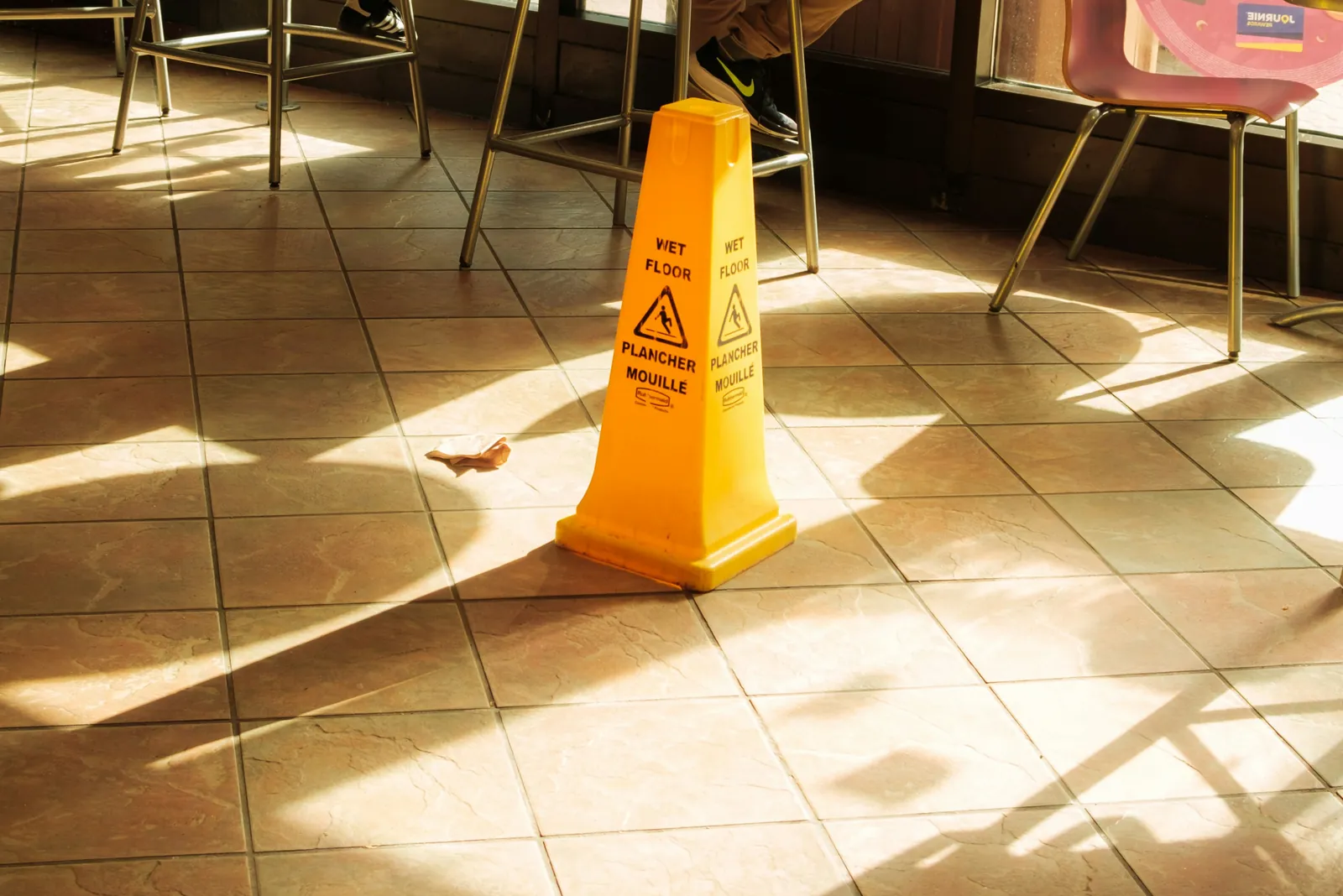
Stores, apartment complexes, and businesses have a legal duty to keep their property reasonably safe. When a wet floor, broken step, or poorly lit parking lot causes a fall, the owner may be responsible for your injuries. As a slip and fall attorney in Dallas, Sikandar Mehr helps injured people prove what the owner knew and when, which is what decides these cases.

Premises cases are won on evidence that disappears quickly: video, cleaning logs, and incident reports. We move fast to secure it. You work directly with your attorney, and there is no fee unless we win.

How Mehr Legal handles your slip-and-fall case

We focus early on the evidence the owner controls, because that is where these cases are won or lost.

  1. A free, honest evaluation

    We review how you fell and your injuries, and tell you plainly whether the facts support a claim.

  2. Demand the video now

    We send preservation letters for surveillance footage and logs before they are overwritten.

  3. Prove notice

    We look for evidence of how long the hazard was there and who knew about it.

  4. Inspect the scene

    We document lighting, flooring, warning signs, and conditions while they still match the day of your fall.

  5. Document your injuries

    We gather medical records and bills and work with your doctors on future care.

  6. Negotiate, ready for trial

    We present the evidence in a demand and file suit if the insurer will not be fair.

See our case process for each step.

What makes slip-and-fall claims different in Texas

A fall on someone else's property does not automatically mean the owner pays. Texas law asks what the owner knew about the danger and how long it was there, and insurers defend these claims hard. The difference between a strong and weak case is usually evidence gathered in the first days.

What Makes Slip-and-Fall Claims Different in Texas
Car accident claimSlip and fall claim
Key questionWho caused the crashDid the owner know, or should it have known, about the hazard?
Who usually has the evidencePolice and both driversThe property owner: video, cleaning logs, incident reports
Common defenseYou were speeding or distractedThe hazard was open and obvious, or was not there long enough
Your status mattersRarelyYes: customer, guest, or trespasser
Typical injuriesNeck and back, fracturesHip and wrist fractures, head injuries, back injuries

Liable parties in a Texas slip-and-fall claim

  • A store, restaurant, or other business open to the public
  • An apartment complex owner or property manager
  • A landlord responsible for common areas
  • A cleaning, maintenance, or security contractor
  • A hotel, gym, or entertainment venue
  • A government entity, under special Tort Claims Act rules

Insurance coverage in slip-and-fall claims

Most businesses and apartment owners carry commercial general liability insurance, which usually pays premises claims. Those insurers defend these cases aggressively and often deny them early by arguing the owner did not know about the hazard. Homeowner's insurance may cover falls at a private home.

Evidence that proves a slip-and-fall claim

  • Surveillance video of the fall and the time before it
  • Cleaning, inspection, and maintenance logs
  • The store's or property's incident report
  • Photos of the hazard, the lighting, and warning signs, or the lack of them
  • Your shoes and clothing as they were
  • Witnesses, including employees who saw the hazard

What to do after a slip and fall in Texas

If you can, take these steps at the scene or ask someone with you to do it. They often decide whether a claim can be proven.

  1. Get medical help

    Ask for an ambulance if you are badly hurt. Hip and head injuries need fast care.

  2. Report the fall

    Tell a manager and ask that an incident report be written.

  3. Photograph the hazard

    Capture the spill, step, or defect before anyone cleans or fixes it.

  4. Photograph the area

    Show lighting, warning signs or the lack of them, and your shoes.

  5. Get witness names

    Customers and employees may have seen the hazard or the fall.

  6. Do not guess about fault

    Stick to facts. Do not say "I wasn't looking" or apologize.

  7. Keep your shoes and clothes

    Store them as they were. They can be evidence.

  8. Decline recorded statements

    The owner's insurer may call quickly. Talk to a lawyer first.

  9. Call a slip and fall lawyer

    Store video is often recorded over within days.

Texas laws that affect your slip-and-fall claim

Three sets of rules decide most Texas premises cases: the two-year deadline, the 51% fault rule, and what an injured customer must prove about the owner's knowledge.

Texas two-year deadline to file a slip-and-fall claim

Most premises liability lawsuits must be filed within two years of the fall (Tex. Civ. Prac. & Rem. Code § 16.003). Falls on government property require written notice within six months or less (Tex. Civ. Prac. & Rem. Code § 101.101). In practice, the evidence clock is much shorter. Stores often record over surveillance video within days or weeks, so a preservation letter sent early can make or break the case.


Texas 51% shared-fault rule

Insurers in fall cases often argue you should have been watching where you walked. Texas reduces your recovery by your share of fault and bars it at 51% or more (Tex. Civ. Prac. & Rem. Code §§ 33.001, 33.012). A hazard that was hard to see, poorly lit, or unmarked weighs against the owner, not you.

What an injured customer must prove

A customer or other invitee must show that the owner knew or reasonably should have known about a dangerous condition, the condition posed an unreasonable risk of harm, the owner failed to reduce or eliminate it, and that failure caused the injury (Keetch v. Kroger Co., 845 S.W.2d 262 (Tex. 1992)). To prove the owner "should have known," Texas generally requires evidence of how long the hazard was there (Wal-Mart Stores, Inc. v. Reece, 81 S.W.3d 812 (Tex. 2002)).

Slip-and-fall statistics in Texas

  • More than 14 millionU.S. adults 65 and older, about 1 in 4, report falling each year.

  • Falls are the No. 1cause of injury for adults 65 and older in the United States.

  • The fall death rate for older adults rose 21%from 2018 to 2024, from 64.7 to 78.4 per 100,000.

  • 844U.S. workers died in falls, slips, and trips in 2024, including 77 in Texas.

Sources: CDC, Older Adult Falls Data; U.S. Bureau of Labor Statistics, Census of Fatal Occupational Injuries, 2024; BLS, Fatal Occupational Injuries in Texas, 2024.

Where we handle slip-and-fall cases in Texas

Mehr Legal handles premises liability cases across Texas from our office in Richardson. We see falls in grocery stores and big-box retailers, restaurants, apartment complexes, parking lots and garages, hotels, and gyms throughout Dallas-Fort Worth, Houston, Austin, and West Texas.

There is no official government count of slip and fall claims by county, so this page relies on national injury data. That data is striking: falls are the leading cause of injury for older adults, and fall deaths among people 65 and older have climbed steadily. Falls also hurt younger people at work and in public places, which is why we also handle workplace and construction injuries.

Consultations are available by phone or video, and in-person meetings take place at our Richardson office. Related pages: neck and back injuries and personal injury.

Frequently asked questions about Texas slip-and-fall claims

How do you win a slip and fall case in Texas?

You win by proving the property owner knew or should have known about the hazard and failed to fix it or warn you, and that this caused your injury (Keetch v. Kroger Co.). The strongest cases have video, cleaning logs, or witnesses showing how long the hazard was there.

How much is a slip and fall settlement?

There is no standard amount. Value depends on the severity of your injuries, your medical bills and lost income, the strength of the evidence about the owner's knowledge, and the insurance available. Fractures and surgery generally mean higher value than sprains. We give you a realistic range after reviewing the evidence.

How do you negotiate a slip and fall settlement?

By building the proof first. Gather the video, incident report, and medical records, wait until your treatment picture is clear, and then present a demand backed by evidence. Insurers pay more when the notice evidence is strong and the case is ready for trial.

What if I did not report the fall right away?

You may still have a claim, but late reporting makes proof harder. Report it as soon as you can, write down what happened, and talk to a lawyer about preserving video before it is gone.

Can I sue if I fell at my apartment complex?

Often, yes. Landlords and property managers must keep common areas such as stairs, walkways, and parking lots reasonably safe. The details of your lease and who controls the area matter.

What if I fell at work?

If your employer carries workers' compensation, you usually file a workers' comp claim. If your employer is a non-subscriber, you may be able to sue. See our workplace injury page.

How long do I have to file a slip and fall lawsuit in Texas?

Generally two years from the date of the fall (Tex. Civ. Prac. & Rem. Code § 16.003). Falls on government property require notice within six months or less.

Can I still recover if I was partly at fault?

Yes, if your share of fault is 50% or less. Your recovery is reduced by that percentage and barred at 51% or more (Tex. Civ. Prac. & Rem. Code § 33.001).

Talk to a slip and fall attorney today

If you were hurt in a fall on someone else's property, the video may not last long. Talk directly with attorney Sikandar Mehr about what happened. The consultation is free, and there is no obligation.

Call 214-628-3360, read about our case process and fees, or contact us online.

  • No fee unless we win. One flat contingency fee that never goes up, with case expenses explained in writing.

  • We move fast on evidence. Preservation letters go out before the video is gone.

  • One attorney, start to finish. Direct access to your lawyer, not a call center.

  • Statewide reach. Dallas-Fort Worth, Houston, Austin, West Texas, and everywhere in between.

  • Help in your language. English, Urdu, Punjabi, Hindi, and Spanish-language assistance.

Sources

Figures, statutes, and cases checked November 4, 2026.

Call 214-628-3360